

🌐 Technologies Likely to Shape a Future World War — and the Geopolitical Lessons We Ignore at Our Peril


If a future global conflict were to erupt, it would not resemble the industrial wars of the 20th century. There would be no single “front line,” no clear declaration, and no neat separation between civilian and military domains. The battlefield would be everywhere: networks, space, supply chains, information ecosystems, and economies.
Modern great-power competition suggests that any large-scale conflict would be defined less by massed armies and more by technology-enabled disruption. Understanding these technologies is not about glorifying war—it is about recognizing how power, deterrence, and instability now operate.
1) Artificial Intelligence as the Nervous System of War

AI will not “decide” wars on its own, but it will compress decision time to a level humans struggle to match.
Likely roles
Intelligence analysis at machine speed
Pattern recognition across vast sensor networks
Decision-support for commanders under time pressure
Strategic reality
The side that integrates AI without surrendering human judgment gains an advantage. The side that over-automates risks catastrophic escalation through misinterpretation.
Lesson
Speed without restraint increases the risk of accidental war.

2) Cyber Warfare as a Primary Opening Move
Cyber operations have already become a normalized instrument of state power. In a future world war, cyber actions would likely precede any kinetic violence.
Targets
Power grids and energy distribution
Financial systems and payment rails
Communications and logistics platforms
Geopolitical lesson
Cyber conflict blurs the line between war and peace. Attribution is slow, retaliation is ambiguous, and escalation ladders are unclear.
Lesson
In cyber space, ambiguity is a weapon—and also a liability.
3) Autonomous and Semi-Autonomous Weapons Systems
Uncrewed systems—air, sea, and land—will dominate tactical environments. Their importance lies not just in lethality, but in scalability and deniability.
Characteristics
Low cost compared to traditional platforms
High saturation potential
Reduced political cost of deployment
Strategic concern
When machines can select and engage targets with minimal human input, accountability dissolves.
Lesson
When responsibility is diluted, restraint erodes.
4) Space as a Contested Warfighting Domain

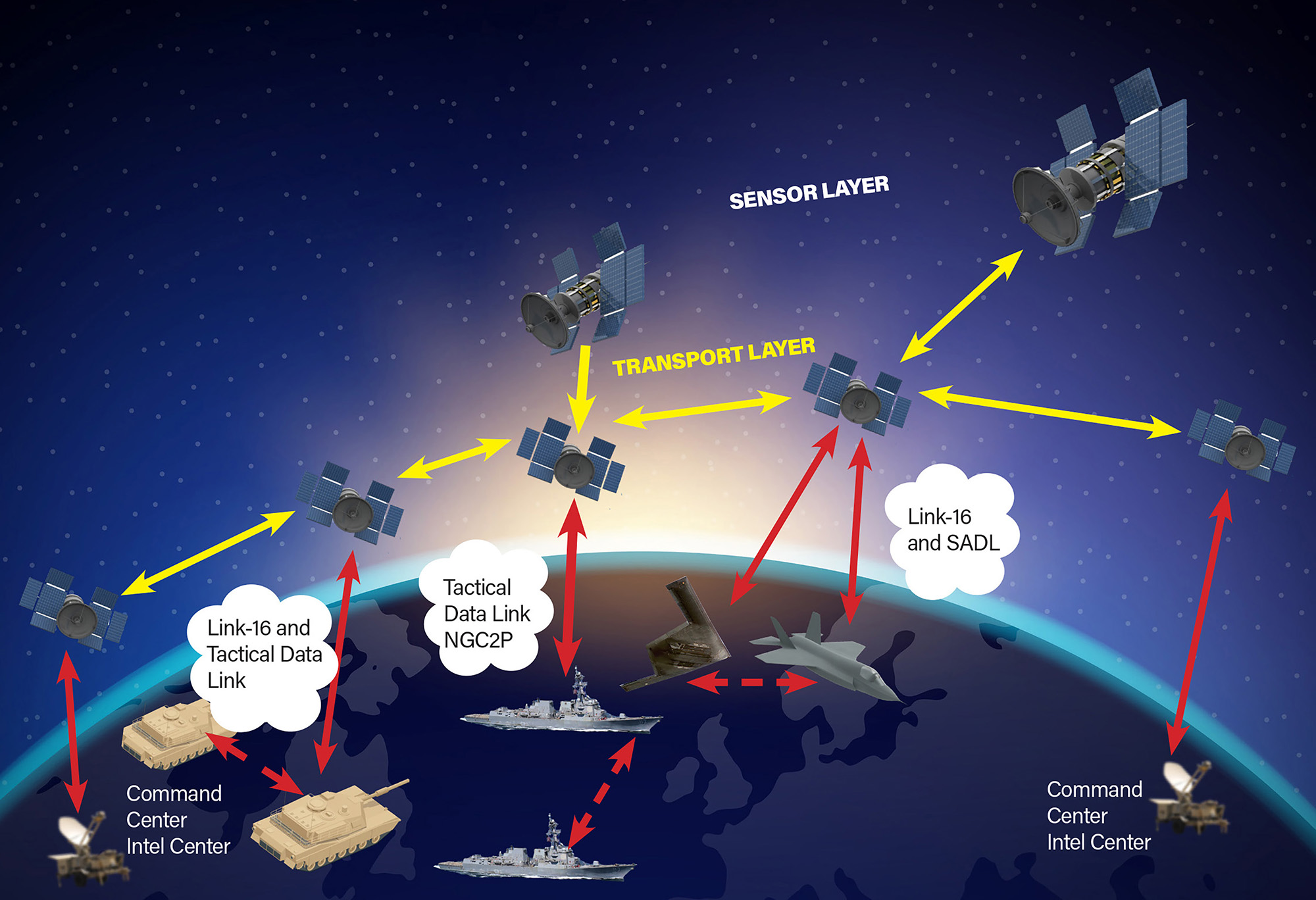
Modern societies depend on satellites for:
Navigation
Communications
Weather forecasting
Financial timing
Disrupting space infrastructure would paralyze civilian life without firing a shot on land.
Geopolitical risk
Anti-satellite actions create debris that endangers all actors, including neutral states.
Lesson
Space warfare punishes the attacker almost as much as the target.
5) Information Warfare and Cognitive Attacks

Future wars will be fought inside human perception.
Techniques
AI-generated misinformation
Deepfakes undermining trust
Algorithmic amplification of social fractures
Strategic objective
Not to convince everyone—but to ensure no one trusts anything.
Lesson
A society that cannot agree on reality cannot coordinate defense.
6) Economic and Supply-Chain Warfare

Economic coercion is already a preferred tool of statecraft.
Weapons
Sanctions
Export controls (especially semiconductors)
Energy leverage
Maritime chokepoints
Reality
Wars can now be lost without battlefield defeat—through industrial exhaustion.
Lesson
Industrial resilience is national security.

7) Biotechnology and Dual-Use Research Risks

Advances in biotechnology bring enormous medical promise—but also strategic risk.
Concern
Dual-use research lowers barriers to misuse, whether intentional or accidental.
Lesson
The most dangerous technologies are those that do not look like weapons.
The Core Geopolitical Lessons
1️⃣ Deterrence Is Now Multidomain
Military strength alone is insufficient. States must deter across cyber, economic, informational, and space domains simultaneously.
2️⃣ Escalation Will Be Fast—and Hard to Control
AI-accelerated decision cycles reduce the window for diplomacy.
3️⃣ Civilian Infrastructure Is the New Center of Gravity
Power grids, data centers, and trust in institutions matter more than tank counts.
4️⃣ Alliances Matter More Than Ever
No state can secure all domains alone. Fragmented alliances invite coercion.
A Final, Uncomfortable Truth
A future world war would not announce itself. It would emerge gradually, normalized step by step, disguised as “competition,” “retaliation,” or “defensive measures.”
Technology does not make war inevitable—but it lowers the threshold for catastrophic mistakes.
The greatest risk of advanced warfare is not malicious intent,
but miscalculation at machine speed.
📚 References & Further Reading
World Economic Forum – Global Risks Report
RAND Corporation – AI and Future Warfare
Center for Strategic and International Studies – Cyber & Space Security
NATO – Emerging and Disruptive Technologies
Stanford University – AI, Conflict, and International Security


